
Air Busan Merger: Jin Air, Air Busan and Air Seoul Become One Airline in March 2027

Air Busan is about to disappear into Jin Air. South Korea’s three budget airlines owned by the Korean Air group plan to merge into one low-cost airline under the Jin Air name on 17 March 2027. The combined airline will have about 58 aircraft, making it the largest budget airline in South Korea by fleet size.
The Jin Air merger follows the Korean Air Asiana merger, which is due to create a single full-service airline on 17 December 2026. This guide explains why the three airlines are combining, the key dates, what happens to Air Busan flights from Busan, and what it means for your bookings, fares and loyalty points. Facts are checked against the sources listed at the end.
Table of Contents
Air Busan Merger at a Glance
| Detail | What you need to know |
|---|---|
| Airlines merging | Jin Air, Air Busan and Air Seoul |
| New name | Jin Air (Air Busan and Air Seoul brands retire) |
| Planned launch | 17 March 2027 |
| Board approval | Merger agreement approved and signed on 21 August 2026 |
| Shareholder votes | Extraordinary meetings planned for December 2026 |
| Combined fleet | About 58 aircraft |
| Parent group | Korean Air, after its takeover of Asiana Airlines |
| Bookings now | Separate: keep managing bookings with the airline you booked |
Why Three Korean Low-Cost Airlines Are Becoming One
Jin Air is the budget airline of Korean Air. Air Busan and Air Seoul belong to Asiana Airlines. When Korean Air bought Asiana, it also took control of Asiana’s two budget airlines, which left the group owning three competing low-cost airlines flying many of the same routes.
Running three separate airlines means three sets of booking systems, websites, loyalty schemes, sales teams and head offices. By folding its two Asiana-owned budget airlines into Jin Air, the group expects to cut costs, use its aircraft more efficiently and build a network that links Seoul, Busan and other regional airports. The stated goal is to become Asia’s leading low-cost airline.
Under the plan, Jin Air takes over all the assets, liabilities, rights and employees of the other two airlines. That means staff move across to the combined airline rather than being let go, and existing contracts pass to Jin Air.

Meet the Three Airlines
Jin Air
Jin Air was launched by Korean Air in 2008. It flies from Seoul Incheon, Seoul Gimpo, Busan and Jeju to destinations across Japan, China, Taiwan, Southeast Asia and the Pacific. According to Business Traveller, it runs 47 international and 14 domestic routes, including Seoul to Jeju, Tokyo, Osaka and Bangkok. Jin Air flies mainly Boeing aircraft.
Air Busan
Air Busan is based at Gimhae International Airport in Busan, South Korea’s second-largest city. The airline was set up in 2007 and started flying in 2008. It flies about 39 routes from its Busan base, mostly short international flights to Japan, China, Taiwan and Southeast Asia, plus domestic flights. It flies Airbus A320-family aircraft, and it is the brand most closely tied to a single Korean city.
Air Seoul
Air Seoul is the youngest of the three. Set up by Asiana, it started flying in 2016 and operates about ten routes from Incheon International Airport, mainly to Japan and Southeast Asia. Like its Busan sister airline, it flies Airbus A320-family aircraft.
Jin Air Merger Timeline
| Date | Milestone |
|---|---|
| 21 August 2026 | Boards of the three airlines approve and sign the merger agreement |
| From September 2026 | Jin Air starts taking 14 extra leased aircraft from Korean Air and Asiana, including ten Airbus A321neos |
| December 2026 | Extraordinary shareholder meetings to approve the merger |
| 17 December 2026 | Korean Air and Asiana due to start flying as one airline |
| 17 March 2027 | Combined airline due to launch as Jin Air, subject to a merger licence from the transport ministry |
The March 2027 date depends on approvals, including a merger licence under South Korea’s Aviation Business Act. If any approval is delayed, the launch date could move.
The Korean Air Asiana Merger Behind It
The budget airline merger is a direct result of the Korean Air Asiana merger, one of the biggest airline deals in Asia. Korean Air agreed to buy Asiana in 2020 and spent several years winning approval from competition regulators in South Korea and abroad, including the European Union, the United States and Japan. To win approval, it had to give up some routes and slots to rival airlines.
With the takeover approved, Asiana became part of the Korean Air group, and the two are due to start flying as one airline under the Korean Air licence on 17 December 2026. Once the full-service airlines are combined, it makes sense to combine the budget airlines too, so the group has one full-service airline and one low-cost airline rather than one full-service airline and three budget ones.
For travellers, that means South Korea will soon have far fewer airline brands than before. Asiana, Air Busan and Air Seoul will all disappear, leaving Korean Air and Jin Air as the group’s two airlines.
How the Deal Works
Jin Air is the surviving company and absorbs the other two. Shareholders of the two absorbed airlines receive new Jin Air shares in exchange for their holdings. The exchange ratios were set using market prices for the two airlines listed on the Korean stock exchange, and an intrinsic valuation for Air Seoul, which is not listed.
After the shareholder votes in December 2026, the combined airline still needs its operating licence updated before it can fly as one airline. That is why there is a three-month gap between the shareholder meetings and the planned launch in March 2027.
Fleet: Boeing Meets Airbus
One of the biggest practical challenges of the Jin Air merger is the fleet. Jin Air flies mainly Boeing aircraft, while Air Busan and Air Seoul fly Airbus A320-family jets. Pilots are trained and licensed for specific aircraft types, so the combined airline will need to run two separate fleets, at least for a while.
- Combined fleet: about 58 aircraft, compared with 45 at Jeju Air, the largest independent Korean budget airline.
- Extra aircraft: Jin Air is leasing 14 more aircraft from Korean Air and Asiana, including ten Airbus A321neos, with deliveries from September 2026.
- Pilot training: Jin Air has invested about 22 billion won (about US$15.8 million) in a full-flight simulator for the A320neo family, so it can train Airbus pilots itself.
- Airbus in Jin Air colours: as a result, Jin Air will fly Airbus aircraft for the first time, alongside its Boeings.

Air Busan and the Plan for a Second Hub in Busan
The most sensitive part of the merger is what happens in Busan. The Busan airline is a home-grown carrier for South Korea’s second city, and local politicians and civil groups have raised concerns about losing it. Some have called for the combined airline to have its headquarters in Busan.
In October 2026, the Financial News reported a Korean Air document titled “Plan to Establish Busan as a Second Hub for the Integrated LCC”, which was obtained by Korean lawmakers. According to ch-aviation, the plan would:
- Add routes: increase international routes from Busan from 28 to 33.
- Add flights: increase weekly flights from Busan from 281 to 339.
- Base more aircraft at Busan: currently five Jin Air and 16 Air Busan aircraft are based there, and the plan calls for more, although the final number has not been decided.
If the plan goes ahead, travellers from Busan and the surrounding Yeongnam region could see more direct international flights after the Air Busan brand disappears, rather than fewer. The plan still needs to be confirmed, so treat these numbers as targets rather than promises.
Air Busan Routes After the Merger
Flights will continue as normal until the merger. After 17 March 2027, the routes are expected to be flown by Jin Air, using the same aircraft and crew. Where both airlines already fly the same route, the combined airline may merge the schedules, which could mean fewer flights at some times of day.
- Busan to Japan: some of the busiest short international routes from Busan, and a core part of the airline’s network.
- Busan to China, Taiwan and Southeast Asia: popular holiday routes that are likely to remain important.
- Domestic flights: routes such as Busan to Jeju and Seoul Gimpo will move to Jin Air.
- New routes: the second-hub plan points to more international routes from Busan.
Check your booking after March 2027 for flight number changes. Air Busan flight numbers use the code BX, while Jin Air uses LJ, so expect your flight number to change once the airlines combine.
What Happens to Your Booking?
If you have a booking with either of the Asiana-owned budget airlines, your flight should go ahead as planned. Until the merger takes effect, keep managing your booking on the website or app of the airline you booked with.
- Flights before 17 March 2027: nothing changes. Check in and manage your booking with the airline on your ticket.
- Flights after 17 March 2027: your booking is expected to move to Jin Air. Watch your email for details of any changes to flight numbers, times or baggage allowance.
- Schedule changes: if your flight is changed significantly, check the options offered, which can include a different flight or a refund.
- Travel agents: if you booked through an agent or travel site, they should contact you about any changes.
Loyalty Points and Miles
Business Traveller reports that the combined airline will have a single loyalty programme. Details of how points from the current schemes will carry over have not yet been announced, so keep your current accounts active and watch for emails from the airlines.
Separately, Korean Air is combining Asiana Club miles with its own SKYPASS programme as part of the Korean Air Asiana merger. If you collect Asiana miles on Air Busan or Air Seoul flights, check the latest rules before you book a flight to earn or spend miles.
Fares and Competition Among Korean Low-Cost Airlines
South Korea has one of the most crowded budget airline markets in Asia. The Seoul to Jeju route is reported to be the busiest air route in the world by passenger numbers, and short flights to Japan are hugely popular. After the merger, the main Korean low-cost airlines will be:
| Airline | Notes |
|---|---|
| Jin Air (combined) | About 58 aircraft, owned by the Korean Air group |
| Jeju Air | About 45 aircraft, the largest independent budget airline |
| Trinity Airways (formerly T’way Air) | Flies to Europe and Australia as well as Asia |
| Eastar Jet | Short-haul budget airline based at Seoul |
| Parata Air | Newer airline flying domestic and short international routes |
Less competition on routes where all three group airlines flew could push fares up, especially from Busan. Always compare prices with Jeju Air, Trinity Airways and Eastar Jet before you book, and read our guide to the T’way Air rebrand to Trinity Airways.
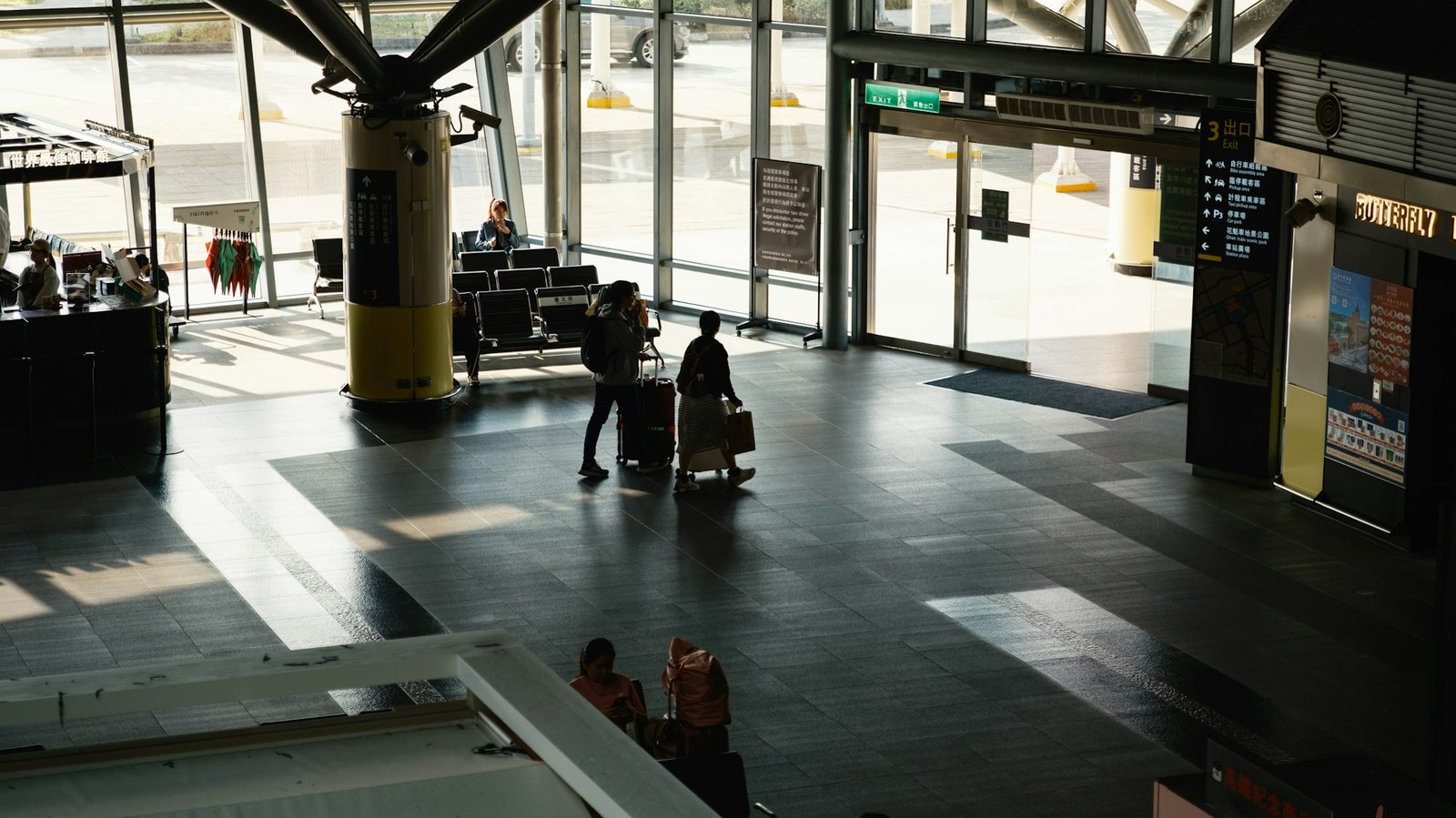
Travelling From Gimhae Airport in Busan
Most Air Busan flights depart from Gimhae International Airport (PUS), about 30 minutes from central Busan by light rail or taxi. The airport has separate domestic and international terminals, so check which one your flight uses before you set off.
- Getting there: the Busan–Gimhae Light Rail Transit stops at the airport, and buses and taxis run from the city centre.
- Arrive early: international flights can be busy at peak times, so allow at least two hours.
- Connections: if you are connecting to a long-haul flight, many international journeys still connect through Seoul Incheon.
Lessons From Other Airline Mergers
Airline mergers rarely go completely smoothly for passengers. The biggest risk usually comes on the day the booking systems are combined, when bookings, seat assignments and check-in details move from one system to another. Problems on that day can lead to long queues at airports and confusion over bookings.
In India, for example, Vistara was folded into Air India in November 2024, and passengers were moved onto Air India flights with new flight numbers. Airlines usually plan these switchovers for quieter periods and contact passengers in advance, but it is still sensible to check your booking carefully if you are flying soon after a merger date.
- Check in online: it helps you spot any problems with your booking before you reach the airport.
- Allow extra time: airports can be busier than usual in the first days after a switchover.
- Keep screenshots: save your booking confirmation, seat number and any paid extras in case they do not transfer correctly.
Should You Book Now or Wait?
There is no need to delay a trip because of the merger. Flights will keep operating, and any booking made now should be honoured by the combined airline. If you are booking a trip for spring 2027 or later, consider these points:
- Flexibility: a fare that allows changes can be worth the extra cost if schedules are still being finalised.
- Price checks: compare prices with other airlines, because fares on some routes may change as the networks combine.
- Holidays: Korean public holidays such as Seollal and Chuseok are very busy, so book early whatever happens with the merger.
- Travel insurance: a policy that covers delays and cancellations adds peace of mind during any period of change.
Baggage and Power Bank Rules
Baggage allowances can change when airlines merge, so do not assume the combined airline will offer the same allowance as Air Busan or Air Seoul. Check the allowance on your booking before you travel, especially for flights after March 2027.
South Korean rules introduced in 2025 stop passengers using or charging power banks on board, and power banks must always travel in your cabin bag, never in checked luggage. These rules apply to all Korean airlines. See our power bank rules guide for details.

7 Essential Tips for Air Busan and Air Seoul Passengers
- Keep your booking reference: you will need it if your booking moves to Jin Air.
- Check your flight number: after March 2027, BX and RS flight numbers are expected to change to LJ.
- Check your baggage allowance: allowances may change when the airlines combine.
- Keep loyalty accounts active: do not let points expire before a merged programme is announced.
- Compare fares: check Jeju Air, Trinity Airways and Eastar Jet on the same route.
- Pack power banks in your cabin bag: and do not use them on board.
- Watch your email: the airlines will contact you about any changes to your trip.
You can compare fares across airlines on the FlightSelects flight search.
Air Busan FAQs
When will Air Busan merge with Jin Air?
Jin Air, Air Busan and Air Seoul plan to merge on 17 March 2027, subject to shareholder approval in December 2026 and a merger licence from the transport ministry.
Will the Air Busan name disappear?
Yes. The combined airline will fly under the Jin Air name, so the Air Busan and Air Seoul brands will be retired.
Can I still book Air Busan flights?
Yes. Air Busan keeps flying and selling tickets until the merger. Flights after March 2027 are expected to be operated by Jin Air.
How big will the new Jin Air be?
The combined airline will have about 58 aircraft, making it the largest budget airline in South Korea by fleet size.
Will Busan keep its flights?
Korean Air has drawn up a plan to make Busan a second hub for the combined airline, with international routes rising from 28 to 33 and weekly flights from 281 to 339.
Why are Jin Air, Air Busan and Air Seoul merging?
After Korean Air bought Asiana, the group owned three budget airlines. Combining them cuts costs and creates one larger low-cost airline.
Facts checked in October 2026 against CAPA on the merger plan, Business Traveller on the combined airline, Herald Business on the merger agreement and ch-aviation on the Busan hub plan. Dates depend on approvals, so check with the airline before you travel.